



Not every shipment fits neatly into a standard ISO shipping container. Heavy industrial machinery, specialized energy equipment, construction vehicles, and oversized manufacturing components exceed standard container dimensions and require dedicated heavy-lift engineering. At Marinex Logistics, we deliver turnkey project cargo logistics engineered around exact cargo blueprints, origin limitations, and destination route requirements.
Key Takeaway: Project cargo logistics requires a comprehensive engineering method: route surveys, bridge load assessments, specialized lifting plans, and multi-agency regulatory permits must be secured prior to cargo dispatch.
1. Specialized Equipment for Oversized Shipments
Depending on the weight, length, height, and center of gravity of the equipment, specialized transport modes include:
- Flat Rack & Open Top Containers: Suitable for cargo exceeding standard container width or height while fitting on container vessels.
- Breakbulk & Heavy-Lift Vessels: Utilized for massive machinery, turbines, transformers, and industrial tanks loaded directly into ship cargo holds.
- Roll-on / Roll-off (Ro-Ro): Ideal for self-propelled machinery, heavy construction equipment, and wheeled project assets.
- Modular Multi-Axle Hydraulic Trailers (SPMT): Engineered for ground transport of ultra-heavy industrial structures.
Project Cargo Equipment Matrix
| Equipment Type | Best Suited Cargo | Key Operational Benefit |
|---|---|---|
| Flat Rack / Open Top | Over-height & over-width machinery | Regular container liner schedules |
| Breakbulk Vessels | Heavy turbines, boilers & generators | Dedicated crane lifting capacities |
| Ro-Ro Vessels | Mining & construction wheeled vehicles | Minimal crane handling & lower risk |
| Hydraulic Multi-Axle | Heavy refinery modules (>100 tons) | Safe ground weight distribution |
2. Four-Stage Project Cargo Execution Plan
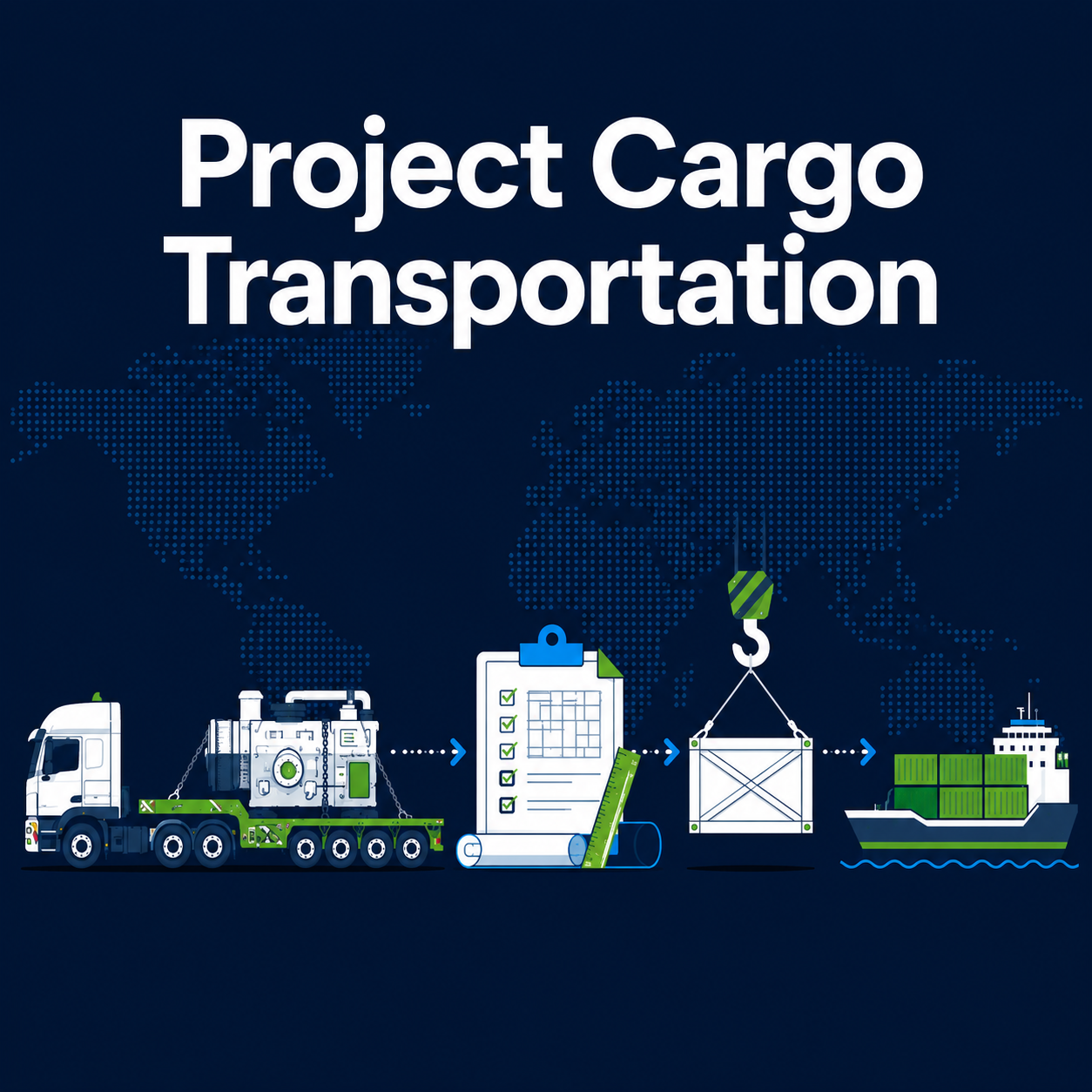
- Route & Feasibility Survey: Detailed inspection of road clearances, bridge capacities, overhead power lines, and port draft depths.
- Permits & Police Escort Coordination: Securing state, municipal, and international transit permits for abnormal loads.
- Rigging & Lashing Engineering: Calculation of cargo center of gravity, tie-down tension ratings, and marine surveyor approvals.
- On-Site Supervision: Dedicated logistics superintendents overseeing crane loading, lashing, and site discharge.
Request a Project Assessment: Contact our specialized Project Cargo division to review technical schematics and develop a tailored heavy-lift transport solution.