



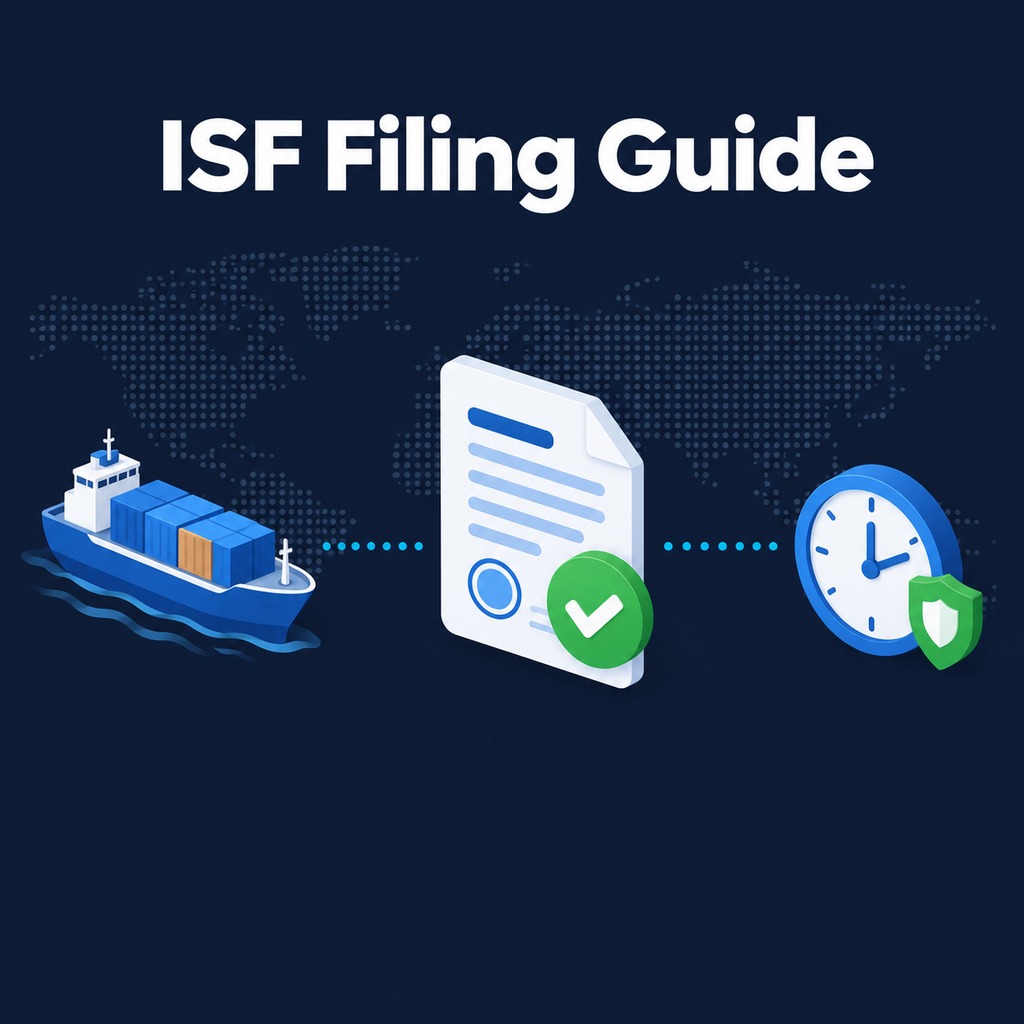
ISF filing, short for Importer Security Filing and commonly referred to as 10+2, is a mandatory electronic submission that importers must transmit to U.S. Customs and Border Protection (CBP) no later than 24 hours before cargo is loaded onto a vessel bound for the United States. It applies equally to ocean imports moving under Full Container Load (FCL) and Less than Container Load (LCL).
What Is ISF Filing?
The Importer Security Filing stems from CBP's 10+2 security program under the SAFE Port Act. Its objective is to give customs authorities advance visibility into containerized ocean shipments to prevent maritime security risks. Under this rule, the ISF importer or their licensed customs broker transmits 10 specific data elements, while the ocean carrier transmits 2 additional operational elements: the vessel stow plan and container status messages.
The 10 ISF Data Elements
| Deadline | Required Data Elements |
|---|---|
| 24 hours before loading at origin | 1. Seller (or Owner) 2. Buyer (or Owner) 3. Importer of Record Number (EIN / IRS / SSN / CBP assigned) 4. Consignee Number 5. Manufacturer or Supplier 6. Ship-to Party 7. Country of Origin 8. HTSUS Number (Harmonized Tariff Schedule code to 6 digits minimum) |
| 24 hours before US arrival (or upon stuffing) | 9. Container Stuffing Location 10. Consolidator (Stuffer) |
CBP calculates compliance against the vessel's actual departure time from the last foreign port, not its arrival in the United States. Missing this window by even one hour triggers a non-compliance record in CBP systems.
ISF Bond and Liquidated Damages
Every ISF submission must be covered by a customs bond. Importers holding an active continuous customs bond can use it to cover ISF transactions. If an importer does not have an annual continuous bond, a single-transaction ISF bond (STB) must be secured before filing. Beyond monetary penalties, CBP may issue a "Do Not Load" (DNL) order at the port of origin, hold cargo at destination terminals, or subject containers to intrusive and costly physical exams.
5-Step ISF Filing Checklist
- Gather commercial details early: Collect seller, buyer, manufacturer, and destination party details when confirming your purchase order.
- Confirm the HTS code: Verify your HTS code classification before your foreign supplier books shipping space.
- File upon booking confirmation: Transmit the initial ISF-10 as soon as the ocean booking and bill of lading numbers are issued, well in advance of the 24-hour cutoff.
- Update stuffing and consolidator data: Provide final container stuffing location and consolidator details as soon as containers are packed at CFS or factory.
- Put your bond and POA in place: Ensure your Customs Power of Attorney (POA) and bond are active before scheduling cargo movement.
Deciding between shipment methods? Compare LCL vs FCL ocean freight, and coordinate your port arrival to prevent demurrage and detention fees.
How Marinex Handles ISF Filing
Marinex Logistics combines FMC-licensed freight forwarding with licensed customs brokerage. Our team files ISF for both FCL and LCL ocean shipments, monitors carrier cutoffs, and coordinates customs clearance to prevent delays and customs holds. You can download the ISF 10 form, the ISF Power of Attorney for single entry or annual bonds, and the ISF Hold Harmless Agreement directly from our documents and forms section.
People Also Ask
Does LCL cargo need an ISF filing?
Yes. Any commercial ocean cargo bound for the United States requires an ISF filing, whether it moves in a dedicated full container (FCL) or as shared consolidated cargo (LCL).
Who is legally responsible for the ISF?
The ISF Importer (ordinarily the goods' US buyer or owner) remains legally responsible for timely and accurate submission, even when delegating transmission to a freight forwarder or customs broker.
Is ISF required for air freight shipments?
No. ISF 10+2 applies exclusively to maritime ocean cargo arriving at US ports. Air shipments fall under separate advance cargo reporting regulations.
What is the difference between ISF-10 and ISF-5?
ISF-10 is required for cargo intended to enter the US commerce stream. ISF-5 applies to transit shipments passing through US ports, such as Foreign Cargo Remaining on Board (FROB), Immediate Exportation (IE), or Transportation and Exportation (T&E) shipments.
Get Your ISF Filed Accurately and On Time:
Send our operations team your ocean booking and commercial invoice, and we will handle filing and customs clearance before carrier cutoffs. Review our US import guide or request a freight quote.